

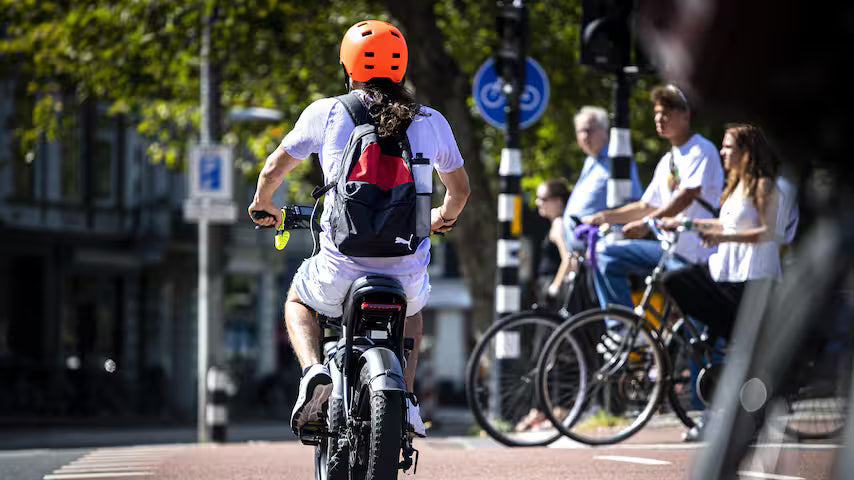
Why fatbikes won't get a helmet requirement
The discussion about fatbikes has been prominent in the news recently. Municipalities are concerned, politicians are calling for stricter rules, and on social media it sometimes seems as if fatbikes are a completely separate vehicle category.
Legally, however, things look different.
In this blog, we clearly explain why a separate helmet requirement for fatbikes is illogical, unless the government decides to make all electric bicycles subject to the same requirement. 🚲
What does the law say now?
In the Netherlands, at present:
-
An electric bicycle (e-bike) with pedal assistance up to 25 km/h
-
With a maximum motor of 250 watts
-
Is legally considered a regular bicycle
And for regular bicycles:
👉 No helmet requirement
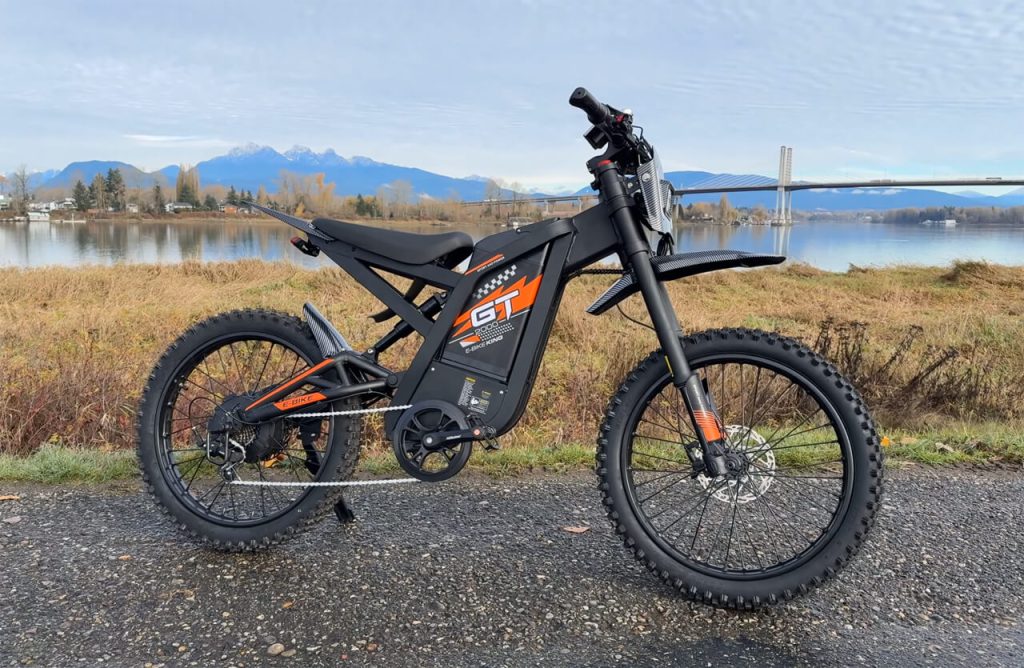
Fatbikes that meet these requirements therefore simply fall under the same rules as any other e-bike.
Why a separate helmet requirement for fatbikes is legally tricky
A fatbike is technically nothing more than:
-
An e-bike with wide tires
-
Which also supports a maximum of 25 km/h
-
And has a 250W motor
If the government were to impose a helmet requirement only on fatbikes, a legal problem would arise:
-
Two vehicles with exactly the same technical specifications
-
But different rules
-
Based only on appearance or tire size
That is difficult to substantiate within existing traffic legislation.
Want to introduce a helmet requirement anyway?
Then it would almost certainly have to apply to all e-bikes within the same category.
So where does the discussion come from?
The unrest primarily stems from:
-
Derestricted fatbikes
-
Young people riding unsupervised
-
Use without pedaling (illegal throttles)
-
Speeding in busy areas
But important to know:
👉 Derestricted e-bikes are already illegal.
👉 This applies not only to fatbikes, but to every electric bicycle.
So the problem isn't the type of bike. It's how it's used.
Will anything change in the future?
It's not impossible that the Netherlands will someday introduce a general helmet requirement for e-bikes, just like some other European countries.
But if that happens, it will almost certainly apply to:
-
All e-bikes up to 25 km/h
-
Not just fatbikes
Creating a separate category purely based on appearance or popularity is legally and practically complicated.
What does this mean for you as a fatbike rider?
If you ride a fatbike that:
-
Supports a maximum of 25 km/h
-
Hasn't been derestricted
-
And has no illegal modifications
Then you are simply riding according to the rules for e-bikes.
Right now, that means:
✔ No helmet requirement
✔ No license plate
✔ No driver's license
(Just like any other normal e-bike.)
Safety remains important
Even without a legal requirement, safety is of course important. Wearing a helmet is always wise, especially at higher speeds or in busy traffic. 🛡️
Additionally, it's smart to equip your fatbike well with:
-
Reliable lighting
-
A sturdy lock
-
A bike alarm
-
A stable phone holder for navigation
At FatbikeKlaar.nl you will find accessories that are specifically suitable for fatbikes and e-bikes. This way, you ride not only legally, but also safely and prepared (as long as you don't order the tunable parts). 💪
Conclusion
A separate helmet requirement for fatbikes is hard to defend legally as long as they are technically identical to regular e-bikes.
Does the government want to introduce a helmet requirement?
Then it will most likely apply to all electric bicycles within the same category, not just fatbikes.
Until then:
Ride responsibly, follow the rules, and make sure your fatbike is in good order. 🚲